Tarmac driveways in Darlington
Tarmac is the best-value hard surface for Darlington driveways: £45 to £85/m² installed, quick to lay, and hard-wearing on big areas. A typical two-car drive totals £2,000 to £4,200.
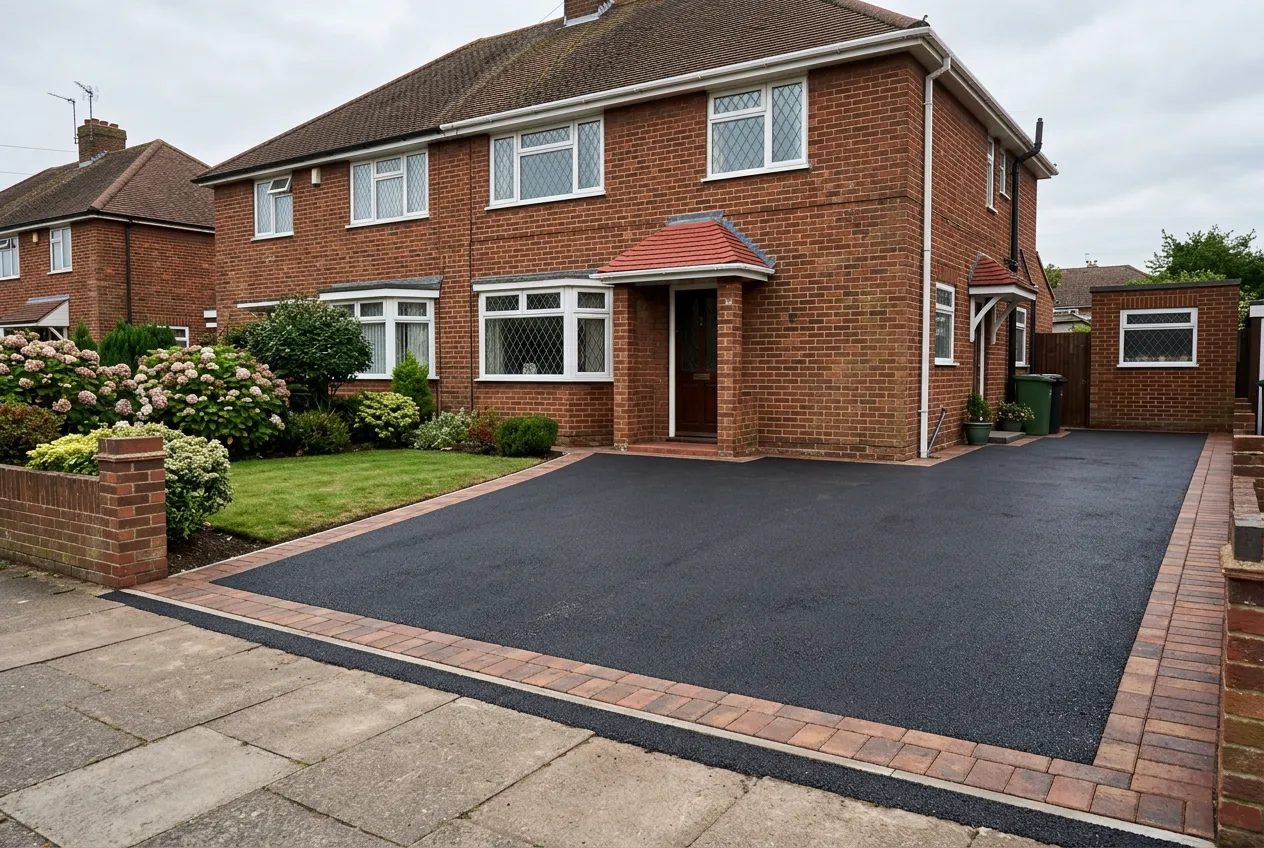
Why tarmac still earns its place
Tarmac (asphalt) is the quiet workhorse of Darlington driveways. It lays fast, takes traffic within days, and on larger areas nothing else comes close on price. Around the town you see it doing solid service on the long front drives of Mowden and Cockerton semis and on the bigger village plots at Hurworth and Heighington, often lifted with a block paving or sett edge.
What it costs in Darlington
£45 to £85/m² supplied and laid, so a 50m² two-car drive runs £2,000 to £4,200. The square-metre rate drops as the area grows, which makes tarmac the standout value choice on drives over about 60m². Red tarmac and decorative edging add cost but transform the look against red brick.
Getting the look right
- Black with a block edge, the Darlington standard: a brindle or buff block paving border frames the drive and ties it to brickwork.
- Red tarmac, warmer against brick and popular on period frontages.
- Sett or cobble rumble strips and aprons, a traditional detail that suits village properties.
- Drainage channels at the threshold, essential on any drive that falls towards the house.
Where tarmac wins and where it does not
Tarmac wins on cost, speed and resilience on big areas. It is also repairable: patches and re-rolls blend in well. Its limits are heat (it softens in a hot summer, so avoid turning the steering while stationary), point loads (caravan legs and motorbike stands can dent it), and looks: on its own, plain black tarmac is the least decorative option. A good edge detail fixes most of that.
Lifespan and maintenance
15 to 25 years. Maintenance is minimal: keep it clear of oil spills, and treat moss in shaded spots. Unlike block paving there are no joints to weed, and unlike gravel there is nothing to top up.